Hygiene tips
Hygiene from antiquity to the present day

Learn more

Let's take a trip back in time to the mid-19th century. At that time, research on germs and bacteria was still in its infancy. Although scientists of the time were aware of the existence of microorganisms, there was still a lack of understanding of how the "little creatures" were linked to infectious diseases [1].
This didn't change until 1847, when German physician Ignaz Semmelweis, who worked at the Vienna General Hospital, noticed something of great significance. His hospital had two separate maternity wards – one staffed exclusively by male doctors and the other by female midwives. Inexplicably, the mortality rate among women giving birth in the ward staffed by male doctors was about twice as high as in the ward with the midwives [2].




To ensure that all germs are effectively inactivated, the procedure for surgical hand disinfection is precisely prescribed. Surgeons, doctors, and assisting staff must adhere to the following steps.

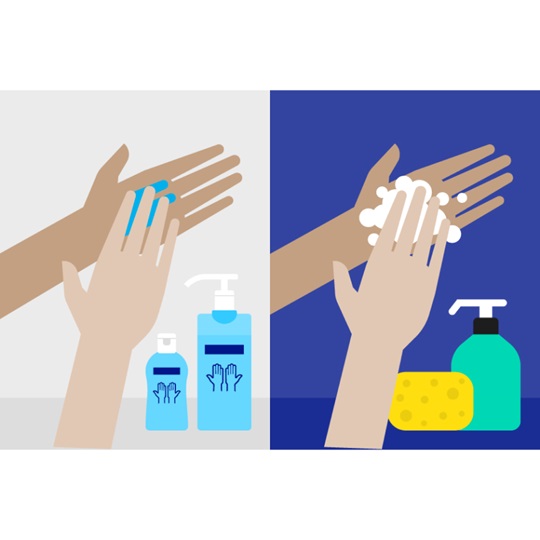
Steps two and three of the instructions described above have only become common in recent years and reflect the transition from "scrub" to "rub". In the past, people did not use disinfectants to prepare for surgery, but washed their hands with water and antimicrobial soap ("surgical scrub"), mainly with chlorhexidine or iodine. Special sponges were used for this purpose, with which surgeons and their team scrubbed their hands for several minutes under running water [6].
The disadvantage of this technique is that frequent washing with soap and water, combined with intensive scrubbing for several minutes, can cause skin irritation and even inflammation. Frequent washing with soap and water also makes the hands brittle and cracked, making viruses and bacteria harder to inactivate. In recent years, more and more hospitals have introduced alcohol-based hand disinfectants ("rub"), which irritate the skin less. The refatting substances in products such as Sterillium®* [7] help the skin maintain or even rebuild its natural protective film [8].
But it is not only the better skin tolerance that speaks in favour of "rub" instead of "scrub" – various studies have shown that alcohol-based hand disinfectants also inactivate the viruses and bacteria found on the skin more effectively than traditional antimicrobial soap. Especially when it comes to the long-term reduction of pathogens on the skin, disinfectants show a greater effect [9, 10]. Another important point is that the modern "rub" technique takes much less time than scrubbing hands with soap and water for minutes on end.
But why disinfect at all if surgeons and staff wear gloves anyway? The question is justified, as modern surgical gloves are very effective at preventing the transmission of potentially dangerous pathogens. They thus offer good protection against post-operative infections.
Various studies, however, have shown that surgical gloves perforate in up to 40 per cent of procedures, allowing pathogens to enter the patient's body via the wound [11]. Thorough surgical hand disinfection, even in combination with gloves, is thus indispensable when preparing for an operation.