
Fever in children: how to measure it and respond appropriately

Learn more

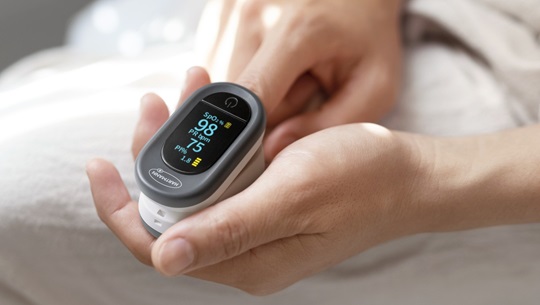
Put simply, oxygen saturation (the SpO2 reading) describes the oxygen level in the blood. In medical terms, it indicates the percentage of haemoglobin, the red blood pigment, that is carrying oxygen. In most healthy people, oxygen saturation is between 95 and 100%.2 It is measured using a pulse oximeter placed on a finger. Important: A single reading never tells the whole story. For example, people with certain heart or lung conditions, such as long COVID, may have lower individual readings. Spending time at higher altitudes can also affect oxygen saturation.2 The following table therefore provides general guidance for adults.
| SpO2 reading | Interpretation |
| 95 – 100% | Normal oxygen level: Indicates an adequate oxygen level in the blood. |
| 90 – 94% | Low oxygen level: Watch for any symptoms. Consulting a doctor is recommended. |
| Below 90% | Critically low oxygen level: Consulting a doctor is strongly recommended. |

Regularly checking oxygen saturation can provide additional insight into the body's oxygen supply. However, an SpO2 reading alone cannot reliably determine or rule out whether sudden or recurring respiratory symptoms are caused by COPD. If COPD is suspected, a lung function test (spirometry) is therefore particularly important.1 During the test, you breathe into a spirometer through a mouthpiece. This special device measures how much air you breathe out and how quickly it leaves your lungs.5 The test can often be carried out at your GP practice. If the suspicion of COPD is strengthened or further tests are needed, you will usually be referred to a respiratory specialist.1
Precisely because COPD often develops gradually, recognising and investigating possible signs early is particularly important. World COPD Day also helps raise awareness of the condition. Held every year on the third Wednesday in November since 2002, the initiative is organised by the Global Initiative for Chronic Obstructive Lung Disease (GOLD). It aims to raise awareness of COPD worldwide, share knowledge and help reduce the burden of the disease.
Sources:
1) Federal Ministry of Health: Chronic obstructive pulmonary disease (COPD). gesund.bund.de
2) U.S. Food and Drug Administration (FDA): Pulse Oximeter Basics
3) World Health Organization (WHO): Chronic obstructive pulmonary disease (COPD)
4) German Lung Foundation (Deutsche Lungenstiftung e. V.): Why e-cigarettes are unsuitable for smoking cessation
5) Federal Ministry of Health: Spirometry. gesund.bund.de

