The 10 Golden Rules of blood pressure measurement

Learn more

Atrial fibrillation is the biggest risk factor for stroke – a disease that causes hundreds of thousands of deaths every year. It is a rhythm disturbance with uncoordinated electrical activation, resulting in ineffective atrial contraction and an often fast and irregular heartbeat.1 This is frequently perceived as palpitations or anginal chest pain. However, atrial fibrillation does not necessarily have any symptoms at all, which makes it hard to detect. There are many risk factors for atrial fibrillation, including ageing, genetics, ethnicity, male sex, valve disease of the heart, and many others, but arterial hypertension is the one most important risk factor.
Regular blood pressure monitoring can help you keep track of your blood pressure. Blood pressure monitors with AFib detection can also identify signs of potential heart rhythm disorders, such as atrial fibrillation, during the measurement. In this way, blood pressure monitoring with Veroval® combines two important preventive measures for heart health.
Atrial fibrillation and high blood pressure are the main risk factors for developing strokes.2 Therefore, both conditions should be identified before harming the patient.
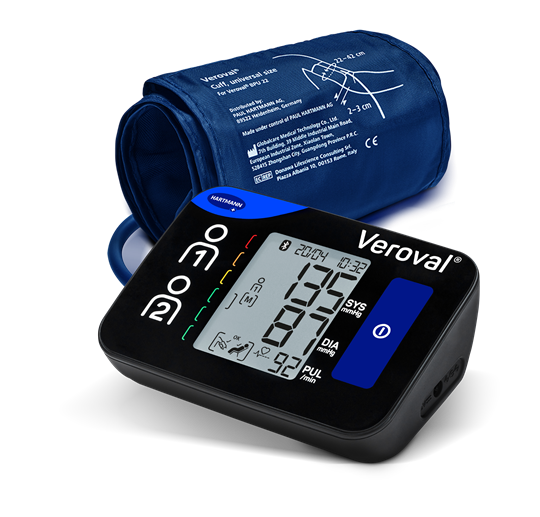
With triple measurement and AFib detection, the Veroval® compact+ upper-arm blood pressure monitor supports reliable blood pressure monitoring and can help identify important indicators of heart health at an early stage.
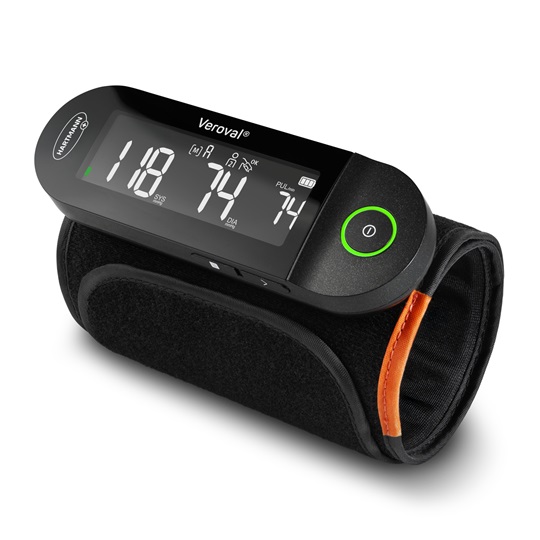
Advanced measurement functions like AFib detection support reliable blood pressure monitoring, while the tubeless design of the Veroval® fusion enables a particularly comfortable, easy and fast measurement experience.