Illustration of a teacher with students.

Children and disinfectants: Everything adults and children need to know

Hands off the disinfectants, kids!
Dear parents, teachers and educators, this article explains how dangerous the incorrect use of disinfectants can be for children in a child-friendly and easy-to-understand way. Read it together with the children, look at the comics together, and use the questions and tasks to help them understand the topic. The quiz at the end helps the children to reinforce the knowledge they have learned.

What are disinfectants for?

In the last years, they suddenly became ubiquitous: disinfectants in the form of bottles, vials and wipes, even canisters. In shops, at schools, and also at home. Disinfectants are important helpers to prevent small pathogens like viruses and bacteria from getting into the body. You can use them to "clean" your hands, but also to "clean" objects such as doorknobs and tables - or, as we say here more precisely: disinfect, which means, in simplified terms, to eliminate the little pathogens. Disinfectants are used to inactivate viruses and bacteria. It's great that disinfectants can be found everywhere, but they can also be dangerous if used incorrectly. Do you already know what to look out for?
Illustration disinfectant destructing virus and bacteria

Disinfectants are not toys!

Many of the bottles are extra small so that they fit easily into a purse or jacket pocket. You can quickly pocket them and take them with you wherever you go. Because they are so small, they look a bit like toy bottles. Some disinfectants, especially hand disinfectants, also have nice bright colours: Our hand disinfectant Sterillium®, for example, is blue and may remind children of Smurf ice cream or sweets.
When parents aren't paying attention for a moment, the little bottle can be snatched. It is therefore very important that the bottles are stored in such a way that children cannot get to them: In the original bottle, for example, in a locked pharmacy cupboard or very high up where children cannot reach it.
Illustration disinfectants out of reach of children
Why don't you and your parents look at where you keep your disinfectants? If they are not already in the right place, think about where you can best put them. It's important to know where it is when you need it, and it's equally important that only your parents can reach it.

It is important to use disinfectants responsibly

Older children are interested in disinfectant bottles not only because of their colour and shape but look more closely at what is inside. Disinfectants consist to a large extent of alcohol - and not a drinking alcohol, but a special alcohol for disinfecting hands and surfaces.

In times of the coronavirus pandemic, it is more important than ever to follow hygiene rules. You have probably noticed the extra soap and disinfectant dispensers at school. Your teacher can help you use them. If you have any questions or need support, please contact them.

You may be wondering what the difference is between hand washing and hand disinfection. Washing hands is mainly about removing dirt from your hands. You should always do this before eating, after using the toilet, after blowing your nose or when you come in from outside. Disinfecting removes possible pathogens. When you are on the road, after using public transport or if you cannot wash your hands, you should disinfect your hands. If you are not old enough to disinfect your hands yourself, ask an adult for help.
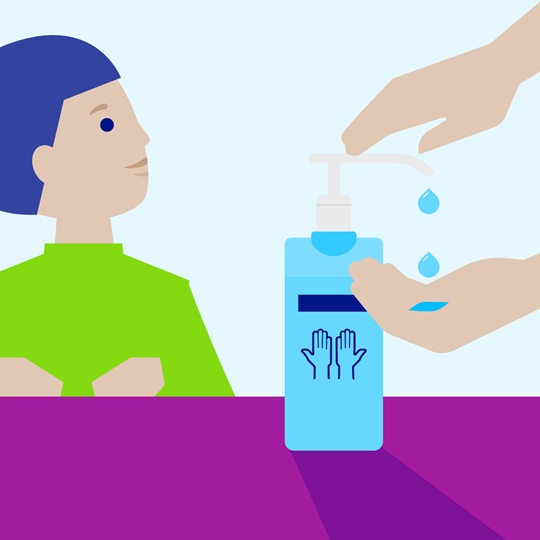
And this is the right way to do it

You will remember that in the beginning we talked about disinfecting both hands and objects. There are two different types of disinfectants for this purpose: Surface disinfectant and hand disinfectant. It is written exactly on the bottles what you can use which one for. However, both products should only be used by adults!

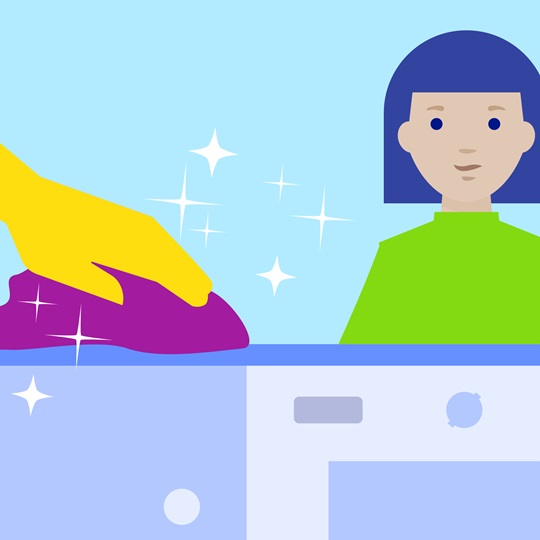
Disinfectant and cloth, an adult's hand cleans a table while child watches

Illustration of disinfectant and cloth, an adult's hand cleans a table while child watches

Hand disinfectant and wipes are used by adult hands to disinfect hands, child watches

Illustration of hand disinfectant and wipes being used by adult hands to disinfect hands, child watches

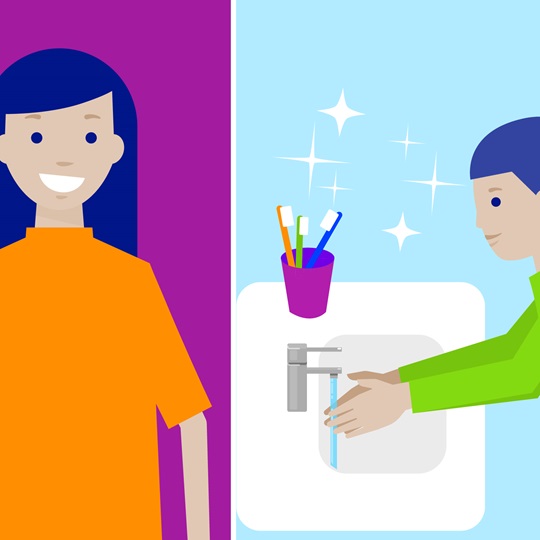
Child happily washing hands with soap under the tap, adult standing next to it

Illustration of child happily washing hands with soap under the tap, adult standing next to it.

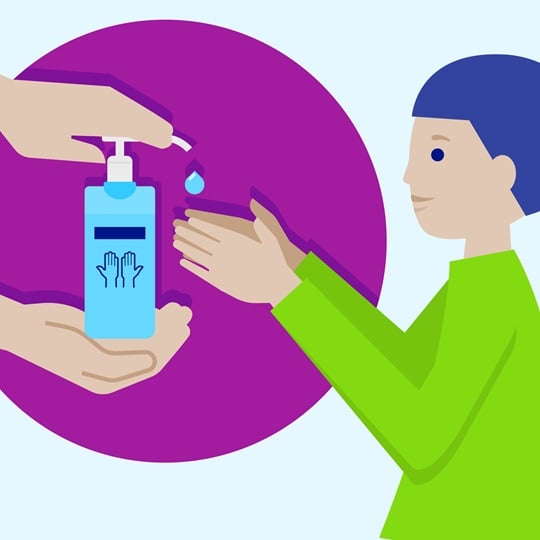
Child gets hand disinfectant from adult and both rub in together

Illustration of a child getting hand disinfectant from adult and both rub in together.

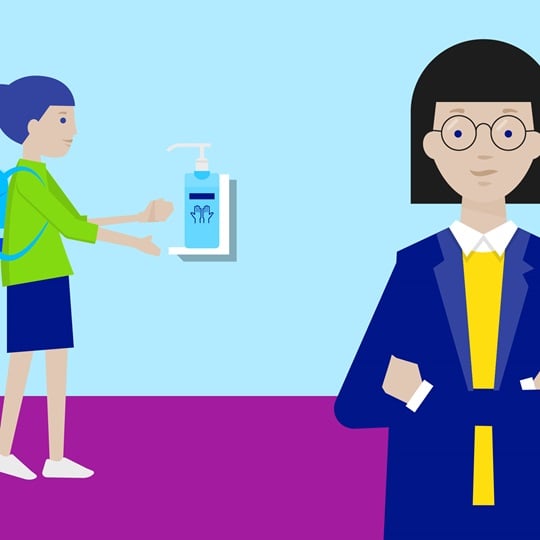
Schoolchild disinfects her hands at the school entrance under the supervision of a teacher

Illustration of a student disinfecting their hands at the school entrance under the supervision of a teacher.

For children, when it comes to cleaning their hands, soap and water are sufficient. Disinfectant products are primarily intended for adult skin, not for children's skin. If it is necessary to disinfect your hands in a situation, this should always be done under adult supervision. If you come into contact with hand disinfectants at school - especially at the present time - you should act as follows:

  • If you notice that school children are misusing disinfectants among themselves, report it immediately.
  • If there are situations where you should disinfect your hands, it is best to ask your teacher about the use of disinfectants. Here we also have our information material on hand washing and hand disinfection in schools.

Afterwards, make sure you don't grab your face with your wet hands. Otherwise, the skin and eyes can start to burn. And of course, don't put your fingers in your mouth afterwards.

Have you remembered all the important points?

Then you'll be able to answer all the questions. Here we go:

1. Where should disinfectants be stored?

a) Somewhere kids cannot reach
b) In the bathroom
c) In the children’s room

2. Are children also allowed to use disinfectants?

a) No, never
b) Only if adults are present and paying attention
c) Yes, of course, children are always allowed to use them

3. What to pay attention to after you have disinfected your hands?

a) You must not touch your eyes
b) You must not lick your fingers
c) You must not grab your face

4. What do you do if you accidentally drink disinfectant?

a) Best not to tell anyone
b) Stay calm and see how bad it gets
c) Tell an adult and seek medical attention if you feel unwell

5. What do you do when you come into contact with disinfectants at school?

a) You are careful with the bottle and use it only under adult supervision and only for your hands.
b) If you have any questions or uncertainties, please contact your teacher.
c) You report it immediately if children play around with disinfectants unsupervised, drink it or anything similar.

You will find the solution at the bottom of the page *

Great, now you are a disinfectant professional! You know exactly what you can and can't do.

Extra tip for the grown-ups: If disinfectant is accidentally spilled in large quantities inside premises, proceed as follows: Remove the liquid immediately, dilute it with plenty of water, remove all sources of ignition and then ventilate the room thoroughly!


*Solution: 1a, 2b, 3 a b and c, 4c, 5 a b and c